

Starting Weekend 5–6 February 2027
A Two-Year Immersion in Traditional Woodland Living. The Woodland Wayer is the original long-form bushcraft immersion and remains one of the most respected and comprehensive programmes of its kind in the UK. Delivered over two years, this flagship course offers depth, continuity, and the rare opportunity to truly live the skills rather than simply learn them.
Beginning 5–7 February 2027, the Derbyshire Woodland Wayer is designed for those who want more than short courses or isolated weekends. It is for people seeking a grounded, methodical journey into bushcraft—one that allows skills to mature through repetition, seasonal context, and time spent in the same woodland.
Over the course of 17 weekend modules and three specialist day courses, participants develop a deep, practical understanding of woodland living. In addition, each Woodland Wayer is granted private access to the woodland on 12 additional weekends, allowing space to practise, consolidate, and experiment independently—an opportunity rarely offered elsewhere.
This continuity is what sets the Woodland Wayer apart. The woodland becomes familiar. Camps improve. Judgement develops. Skills stop feeling theoretical and begin to feel natural.
The Highlights
- Duration: 2 years
- Format: 17 residential weekend modules (Friday 1pm – Sunday noon) and 3 day courses (9am – 5pm)
- Location: Woodland Ways’ private Derbyshire woodland
- Start Date: 5–7 February 2027
Should you be unable to attend a particular weekend, you are simply rolled onto the same module with the following year’s intake, ensuring continuity without penalty.
Beyond the scheduled course dates, Woodland Wayers benefit from:
- 12 additional weekends of private woodland access to practise skills independently
- 10% discount on equipment at the World of Bushcraft Centre
- 15% discount on further Woodland Ways courses and expeditions
These elements transform the course from structured training into a genuine long-term relationship with the land.
The full course cost is £3,600. A discounted rate is available for those paying in full prior to the start date.
Recognising that commitment matters more than circumstance, flexible payment plans are available:
- £660 deposit paid from this page to secure your place, then either...
- Four further quarterly payments of £735, completed during the first year
- or 12 further monthly installments of £245 completed during the first year




OPTION 1:
Buy this course as a gift voucher for someone else. Valid for 18 months.
BUY GIFT VOUCHER
OPTION 2:
Choose the number of places, pay a deposit now and the balance 8 weeks before the course starts or pay in full now.
Select from the dates below.
Starting Weekend 5–6 February 2027
A Two-Year Immersion in Traditional Woodland Living. The Woodland Wayer is the original long-form bushcraft immersion and remains one of the most respected and comprehensive programmes of its kind in the UK. Delivered over two years, this flagship course offers depth, continuity, and the rare opportunity to truly live the skills rather than simply learn them.
Beginning 5–7 February 2027, the Derbyshire Woodland Wayer is designed for those who want more than short courses or isolated weekends. It is for people seeking a grounded, methodical journey into bushcraft—one that allows skills to mature through repetition, seasonal context, and time spent in the same woodland.
Over the course of 17 weekend modules and three specialist day courses, participants develop a deep, practical understanding of woodland living. In addition, each Woodland Wayer is granted private access to the woodland on 12 additional weekends, allowing space to practise, consolidate, and experiment independently—an opportunity rarely offered elsewhere.
This continuity is what sets the Woodland Wayer apart. The woodland becomes familiar. Camps improve. Judgement develops. Skills stop feeling theoretical and begin to feel natural.
The Highlights
- Duration: 2 years
- Format: 17 residential weekend modules (Friday 1pm – Sunday noon) and 3 day courses (9am – 5pm)
- Location: Woodland Ways’ private Derbyshire woodland
- Start Date: 5–7 February 2027
Should you be unable to attend a particular weekend, you are simply rolled onto the same module with the following year’s intake, ensuring continuity without penalty.
Beyond the scheduled course dates, Woodland Wayers benefit from:
- 12 additional weekends of private woodland access to practise skills independently
- 10% discount on equipment at the World of Bushcraft Centre
- 15% discount on further Woodland Ways courses and expeditions
These elements transform the course from structured training into a genuine long-term relationship with the land.
The full course cost is £3,600. A discounted rate is available for those paying in full prior to the start date.
Recognising that commitment matters more than circumstance, flexible payment plans are available:
- £660 deposit paid from this page to secure your place, then either...
- Four further quarterly payments of £735, completed during the first year
- or 12 further monthly installments of £245 completed during the first year
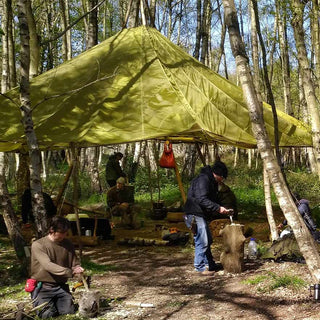
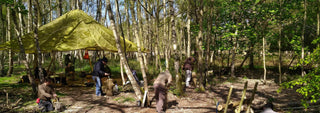
The Woodland Wayer
A comprehensive course aimed at those with either a personal and/or a professional interest in progressing their bushcraft knowledge.
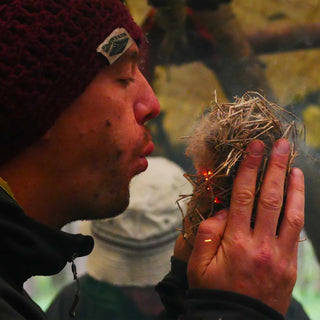
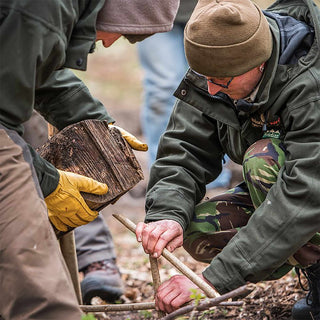
Ethos and Approach
The Woodland Wayer is not a survival course, nor a fast-track instructor qualification. It is a personal development programme, rooted in traditional skills, ecological understanding, and self-reliance.
True immersion requires time. By slowing the pace and revisiting skills across seasons, participants gain an understanding of why things are done, not just how. Fire behaves differently in winter than in summer. Plants offer different gifts across the year. Timber, hides, and fibres all demand patience and attention.
Instruction is delivered by one of the UK’s most experienced bushcraft teams, known for a calm, professional, and quietly authoritative teaching style. The atmosphere is supportive and focused, allowing participants to grow in confidence without pressure or competition.
Course Journey and Modules
What follows is an outline of the journey you will undertake. While comprehensive, the true value lies not in ticking off modules, but in how each skill builds upon the last.
Welcome Weekend & Edged Tools Training
The Welcome Weekend establishes the foundation for the Woodland Wayer journey, setting standards for safety, skill, and thoughtful tool use that carry through the entire programme.
This module begins with a clear and practical understanding of UK knife law, alongside informed guidance on tool selection—helping participants choose equipment that is appropriate, legal, and genuinely useful in the woodland environment. Sharpening, maintenance, and safe handling are treated as core competencies, not secondary skills, ensuring tools are used with confidence and control.
Participants are introduced to a range of edged tools, including fixed-blade knives, folding saws, bow saws, and crook knives. Each tool is explored in context—why it exists, where it excels, and how it fits within an efficient woodland toolkit.
A significant focus is placed on axe work, beginning with selection and care before moving into controlled, small-axe techniques. These sessions emphasise accuracy, body positioning, and awareness, building a solid foundation for safe and effective use.
Throughout the weekend, learning is reinforced through a series of practical carving projects, each designed to develop familiarity with different tools and cutting techniques. These projects are not rushed; they encourage good habits, patience, and an appreciation for clean, purposeful workmanship.
By the end of the weekend, participants leave not only with completed projects, but with a strong grounding in edged tool use—establishing confidence, respect, and competence that underpin all further woodland craft.
Spring Forage
The Spring Forage Day introduces participants to the practice of foraging at a time when the woodland is at its most dynamic and abundant. This module is grounded in safety, accuracy, and seasonal awareness, establishing a careful and responsible approach from the outset.
The day begins with a clear examination of the principles of safe foraging, including ethical harvesting, legal considerations, and the importance of confident identification. Emphasis is placed on understanding when not to harvest, reinforcing a cautious, informed mindset rather than reliance on assumption or folklore.
Participants are then guided through plant and tree identification, learning to recognise key edible species as well as commonly confused or harmful lookalikes. Identification is taught in context—using growth patterns, habitat, smell, texture, and seasonal indicators—rather than isolated field-guide features.
Beyond edible use, the course explores the wider value of spring plants, including medicinal, utilitarian, and craft applications. Attention is given to traditional uses and the role these plants played in sustaining people through the lean months of the year.
Preparation methods are also discussed to highlight how spring plants can be processed and incorporated into simple, nourishing food. Throughout the day, participants develop the confidence to forage thoughtfully and responsibly, laying the foundation for continued learning across the seasons.
Tracking and Awareness Weekend
The Tracking and Awareness Weekend is designed to sharpen perception and deepen understanding of the living woodland. This module moves beyond visual identification, encouraging participants to engage fully with their surroundings—using sight, sound, smell, touch, and movement to discover the often-overlooked presence of wildlife.
Participants learn not only to recognise individual tracks and signs, but to interpret what they reveal: direction of travel, speed, behaviour, and intent. Attention is given to how animals move through the landscape, how they respond to pressure, and how their routines change with weather, time of day, and season.
Instruction extends beyond the traditional focus on tracks associated with food gathering. Instead, the emphasis is on developing a practical, realistic understanding of animal behaviour within the UK, enabling participants to read the woodland as a dynamic, inhabited place rather than a static environment.
Through guided exercises, quiet movement, and observation, participants gain the confidence to move more sensitively through the woods and, in doing so, reduce their own impact. This approach increases the likelihood of close encounters with wildlife while fostering respect and awareness rather than pursuit.
By the end of the weekend, participants experience the woodland differently—more attentive, more informed, and better able to interpret the subtle signs that reveal life moving just beyond immediate sight.
Intermediate Fire Weekend
The Intermediate Fire Weekend develops a thorough and confident understanding of fire as a tool—its role, its behaviour, and the responsibility that comes with its use in the woodland.
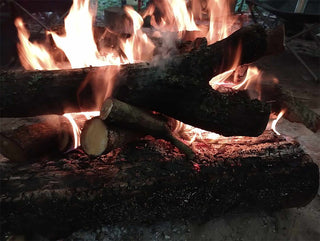
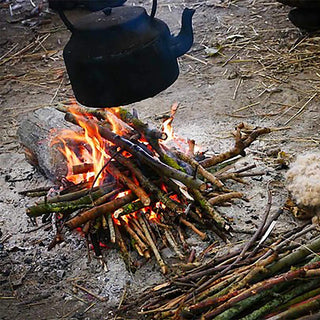
The weekend begins by exploring the importance of fire in human history and woodland living, before moving into the practical skills required to create and manage it effectively. Participants learn how to construct fires for different purposes, examining a range of fire lays and how they influence heat, efficiency, and control.
Considerable attention is given to kindling and tinder, including both man-made and natural options. Participants practise sourcing, identifying, and preparing materials from the woodland, learning how moisture, structure, and processing affect ignition and burn quality.
A wide range of ignition methods is explored, allowing participants to understand both reliability and limitation. These include matches and lighters, ferrocerium rods, flint and steel, and traditional methods using flint and iron pyrites. The emphasis is on adaptability—choosing the right method for the conditions rather than relying on a single technique.
Equally important is the responsible end of the process. Proper fire management, extinguishing, and site restoration are covered in detail, ensuring fires are left safe and the woodland shows no trace of use.
By the end of the weekend, participants have not only built fires successfully, but gained a calm, informed approach to firecraft—one that balances effectiveness with respect for the environment.
Intermediate Shelter Weekend
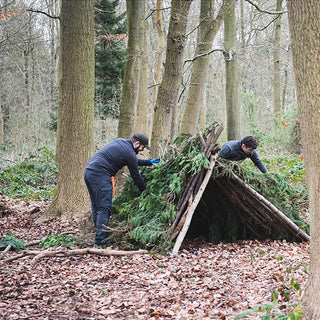
The Intermediate Shelter Weekend focuses on one of the most fundamental aspects of woodland living: creating effective, comfortable shelter. This module explores not only how shelters are built, but why certain designs work in particular conditions.
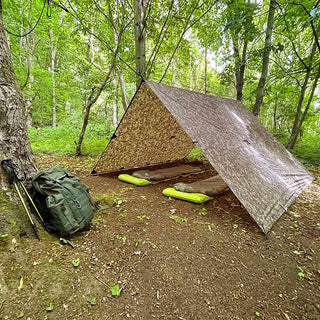
Participants begin by examining the role and importance of shelter, considering protection from weather, insulation, site selection, and the relationship between shelter, fire, and terrain. From there, instruction moves into the practical pitching of tarps, covering configurations that balance speed, adaptability, and protection.
Simple emergency shelters are explored alongside more deliberate, longer-term structures. Participants are guided through the correct construction of one- and two-person shelters, including lean-to designs, kennel-style shelters, and other proven forms suited to the UK woodland environment.
Attention is given to thatching techniques, demonstrating how natural materials can be layered to improve weather resistance and durability. The weekend also explores the often-overlooked elements of comfort, including bedding systems and cot beds, showing how warmth and rest can be significantly improved with thoughtful design.
By the end of the weekend, participants are able to assess a site, select an appropriate shelter style, and construct a structure that offers genuine protection and comfort—skills that form the backbone of confident woodland living.
Cordage and Bark Work Weekend
The Cordage and Bark Work Weekend explores the transformation of natural materials into some of the most essential components of woodland living. This module reveals the remarkable versatility hidden within plants and trees, and the skill required to turn raw fibres into reliable, functional tools.
Throughout the weekend, participants discover a wide range of natural cordage materials, learning how to identify, select, and harvest fibres responsibly. Instruction covers the preparation of these materials before moving into practical techniques including plaiting, braiding, and laid cordage, building from simple strings to strong, usable rope.
Participants are guided through rope-making techniques, gaining an understanding of strength, twist, and tension, and how these factors influence performance and durability in real-world use.
Alongside cordage, the weekend introduces bark processing for container-making, demonstrating how different barks behave and how they can be shaped, folded, and secured to create functional vessels.
The module also covers the production of birch tar and plant-based glues, highlighting how adhesives were historically made and used for tool-making, repairs, and construction. These skills underpin many other crafts and provide insight into the interconnected nature of traditional woodland technologies.
By the end of the weekend, participants leave with a practical understanding of how fibres, bark, and resins can be combined to create durable, purposeful equipment—skills that form a cornerstone of self-reliant woodland craft.
Autumn Forage
The Autumn Forage builds directly on the foundations established during the Spring Forage, deepening understanding as the woodland shifts toward harvest and preparation for winter. This module focuses on recognising how plants and trees change through the seasons and how those changes influence identification, use, and availability.
Participants expand their plant and tree identification skills, learning to recognise species in their autumn form—often without flowers or fresh growth—and to rely instead on structure, bark, fruit, seeds, and habitat. Emphasis is placed on confident identification and safety, reinforcing responsible foraging practice.
The course explores a wide range of edible autumn resources, including fruits, nuts, seeds, roots, and fungi where appropriate. Alongside food, attention is given to other traditional uses, such as materials for medicine, craft, and preparation for colder months.
By the end of the day, participants gain a richer, seasonal understanding of the woodland and how thoughtful harvesting in autumn supports self-reliance through the year.
Camp Furniture and Gadgets Weekend
The Camp Furniture and Gadgets Weekend is dedicated to transforming a functional camp into a comfortable, lived-in woodland home. This module focuses on the practical details that improve efficiency, comfort, and enjoyment during extended time in the woods.
Throughout the weekend, participants design and construct a range of camp furniture and practical gadgets, learning how thoughtful craftsmanship enhances everyday woodland life. Projects include cooking cranes, pot hangers, tripods, and seating, each tailored to individual camps and cooking setups.
Attention is also given to smaller, often overlooked items that make a significant difference in daily comfort and organisation. Participants create camp gadgets, alongside traditional woodsman candles and lamps, introducing low-impact lighting solutions that reduce reliance on torches and modern equipment.
Emphasis is placed on good design, strong joints, and appropriate material selection, ensuring each piece is both functional and durable. These projects encourage problem-solving and creativity, while reinforcing efficient tool use and safe working practices.
By the end of the weekend, participants leave with a camp that feels purposeful and personal—no longer a temporary shelter, but a space shaped for living well in the woodland.
Water and Camp Hygiene Weekend
The Water and Camp Hygiene Weekend focuses on two essential but often misunderstood aspects of woodland living: making water safe to drink and maintaining health through effective camp hygiene. This module brings clarity and confidence to subjects that are fundamental to longer-term time in the woods.
Participants begin by demystifying the science of safe water, gaining a clear understanding of where risks arise and how they can be managed. Instruction covers water sourcing and collection, followed by methods for removing physical contaminants and addressing waterborne pathogens.
A wide range of filtration and purification techniques is explored, allowing participants to understand both modern and traditional approaches. These include primitive boiling methods, chemical purification, and ultraviolet (UV) treatment. Emphasis is placed on selecting the most appropriate method for the conditions, availability of resources, and length of stay.
Alongside water safety, the weekend addresses camp hygiene and sanitation, an often overlooked but critical element of sustainable woodland living. Participants learn practical, low-impact approaches to dealing with human waste, including the siting and construction of camp latrines, as well as broader Leave No Trace principles.
Personal hygiene is also discussed, with realistic strategies for maintaining cleanliness and comfort during extended periods outdoors.
By the end of the weekend, participants leave with a calm, informed approach to water and hygiene—skills that underpin health, comfort, and confidence in any woodland setting.
Axe Use and Tree Interpretation Weekend
The Axe Use and Tree Interpretation Weekend develops confidence and competence with one of the most powerful and versatile woodland tools, while deepening understanding of the trees themselves.
The weekend begins with axe selection, care, and maintenance, ensuring participants understand how to choose an appropriate tool and keep it safe, sharp, and reliable. From there, instruction moves into safe and controlled axe use, with a strong emphasis on body positioning, awareness, and efficiency.
Participants learn practical timber processing skills, including felling, limbing, splitting, and sectioning, gaining experience in working wood from standing tree to usable material. These sessions focus on accuracy and judgement rather than force, reinforcing safe habits that carry into all future work.
As the physical work winds down, attention shifts to tree identification and interpretation. Instructors share their depth of knowledge, guiding participants to recognise trees through form, bark, buds, scent, and habitat, rather than relying on leaves alone.
A highlight of the weekend is a night-time tree identification session, where familiar landmarks disappear and participants learn to read trees through silhouette, texture, and spatial awareness. This exercise significantly sharpens observation skills and deepens confidence in identification.
By the end of the weekend, participants leave with both practical axe competence and a richer understanding of the woodland’s tree species—skills that underpin safe, effective, and respectful woodland craft.
Fur-On Hide Work Weekend
The Fur-On Hide Work Weekend introduces participants to the craft of working with fur-bearing animal hides to create warm, durable, and functional materials.
This module explores the processes required to transform raw hides into usable fur-on skins, suitable for garments and practical equipment. Participants learn how different species behave during processing and how careful handling preserves both the strength of the hide and the quality of the fur.
Instruction covers preparation, cleaning, and treatment methods that maintain flexibility while retaining the insulating properties of the fur. Emphasis is placed on patience, attention to detail, and respect for the material—skills that cannot be rushed and are central to successful hide work.
Throughout the weekend, participants gain insight into how fur-on hides have traditionally been used for clothing, bedding, and protection from the elements. Discussion includes garment potential, durability, and care, allowing participants to understand how these materials can be incorporated into long-term woodland living.
By the end of the weekend, participants leave with a deeper appreciation of fur-on hide work and the knowledge required to create beautiful, practical hides that honour both the craft and the animal.
Basketry Weekend
The Basketry Weekend is dedicated entirely to the craft of traditional hedgerow basketry, focusing on the transformation of natural materials into strong, functional containers.
Participants begin by learning how to select and prepare suitable materials, understanding how timing, species, and processing affect flexibility, strength, and durability. Instruction then moves into the construction of a range of basket and container styles, each utilising different weaving techniques to suit specific purposes.
A variety of weaves are explored, allowing participants to develop both technical skill and an understanding of structure. Alongside this, the weekend introduces coil basketry, demonstrating an alternative approach that expands creative and functional possibilities.
These skills provide the foundation for further exploration and refinement beyond the course.
By the end of the weekend, participants gain practical experience in multiple basketry methods and a deeper appreciation of the craftsmanship involved in creating durable, useful containers from the hedgerow.
Primitive Weaponry Weekend
The Primitive Weaponry Weekend explores the ancestral tools once used for hunting, training, and skill development, offering insight into the ingenuity and understanding required to use them effectively.
Participants are introduced to a range of ancient hunting technologies, examining how their design reflects an understanding of materials, physics, and animal behaviour. The focus is on learning why these tools work, not on performance or competition.
Throughout the weekend, participants have the opportunity to craft their own primitive weapons, including slings, atlatls, bolas, throwing sticks, and other traditional implements. Each build highlights different principles of leverage, balance, and energy transfer.
Safe practice and controlled use are emphasised at all times, with activities conducted in appropriate environments and under close instructor guidance. The aim is skill development, understanding, and respect for the tools and their historical context.
By the end of the weekend, participants leave with a deeper appreciation of ancestral hunting technologies and the practical knowledge required to make and use them responsibly within a woodland setting.
Bow Making Weekend
The Bow Making Weekend guides participants through the complete process of crafting a functional wooden bow, from raw stave to balanced, working tool. This module combines careful craftsmanship with a deep understanding of wood behaviour, patience, and precision.
Participants begin by shaping their bow from a selected stave, learning how grain, knots, and natural character influence strength and performance. As the rough form emerges, attention shifts to refining the profile and developing the correct curve and limb balance, ensuring the bow bends evenly and efficiently.
Once the shape is established, participants cut string grooves and begin the critical process of tillering—the careful, incremental balancing of the bow. This stage requires observation, restraint, and adjustment, and is where much of the learning takes place.
Throughout the weekend, instructors guide participants through each stage, helping them read the wood and respond appropriately rather than forcing progress. The focus is on understanding as much as outcome.
By the end of the weekend, participants leave with both a completed bow and the knowledge required to repeat the process independently—along with a strong appreciation for the skill and attention that traditional bow making demands.
Navigation and Natural Navigation Weekend
The Navigation and Natural Navigation Weekend provides a clear, practical introduction to moving confidently through the landscape using both modern and traditional methods. This module balances technical accuracy with broader situational awareness, ensuring participants understand not only how to navigate, but when and why different approaches are appropriate.
Participants begin with map and compass navigation, learning core skills including taking and following bearings, back bearings, and resections. Instruction also covers giving accurate grid references, route planning, and the use of handrails and other navigational aids to move efficiently and safely through terrain.
Alongside these technical skills, the weekend explores the strengths and limitations of natural navigation techniques. Participants assess the reliability of indicators such as the sun, stars, and moon, as well as the use of trees, plants, landforms, man-made features, and wider landscape patterns.
Rather than presenting natural navigation as folklore, the emphasis is on understanding context, conditions, and corroboration—using multiple indicators to build confidence and reduce error.
By the end of the weekend, participants leave with a grounded, balanced approach to navigation, capable of combining precise tools with environmental awareness to move through the woodland with assurance.
Advanced Fire Weekend
The Advanced Fire Weekend builds on the foundations established during the Intermediate Fire Weekend, focusing on the refinement and mastery of friction fire lighting. This module is dedicated to developing sensitivity, technique, and understanding rather than speed or force.
The primary focus is on fire bow mastery. Participants learn how to source suitable materials directly from the woodland, selecting woods for hearths, spindles, and bearing blocks, and producing their own complete fire bow sets. The use of natural cordage is explored, reinforcing the interconnected nature of woodland skills.
Considerable time is spent refining technique, with instructors guiding participants through fault analysis, helping them recognise and correct common issues related to posture, pressure, speed, and material choice. Alternative fire bow techniques are also introduced, broadening adaptability and resilience in challenging conditions.
In addition to the fire bow, the weekend explores other friction fire methods, including the hand drill and fire saw. These techniques demand increased control and awareness, offering further insight into the relationship between materials, movement, and heat generation.
By the end of the weekend, participants leave with a deeper, more intuitive understanding of friction fire—capable of diagnosing problems, adapting techniques, and reliably producing fire using materials sourced from the woodland itself.
Medicinal Wild Plants
The Medicinal Wild Plants Day Course builds on the foundations established during the foraging courses, focusing specifically on the traditional and practical medicinal uses of wild plants.
Participants learn to identify a range of species valued for their medicinal properties, with an emphasis on correct identification, safety, and responsible harvesting. The course explores how plants have historically been used to support health and wellbeing, while grounding this knowledge in realistic, appropriate applications.
A key element of the day is practical preparation. Participants are guided through the process of turning plants into usable remedies, such as infusions, oils, salves, or other preparations, depending on the season and available materials. These items are prepared to take away, reinforcing learning through hands-on experience.
Discussion also covers ethical considerations, limitations, and the importance of understanding when plant-based remedies are appropriate and when they are not.
By the end of the day, participants leave with a deeper appreciation of medicinal plants, practical preparation skills, and a thoughtful, informed approach to their use within a woodland context.
Hide Tanning and Using Your Deer (2 Weekends)
This two-weekend module forms a significant part of The Woodland Wayer journey, guiding participants through the traditional processes required to transform raw deer hide into usable materials while honouring the animal in full.
Across the course, participants are introduced to both brain tanning and vegetable tanning, gaining an understanding of how each method affects the character, strength, and purpose of the finished material. These processes culminate in the production of buckskin and leather, suitable for clothing, equipment, and long-term use.
If time and interest allow, the course also extends beyond hide alone, examining the wider use of the animal. Participants are introduced to elements of bone and antler work, the production of hide glue, and the creation and use of rawhide, reinforcing a holistic approach that values every part of the deer.
Emphasis is placed on patience, respect, and understanding—skills that require time and repetition, and which reflect the depth of traditional woodland craft.
By the end of the two weekends, participants leave with both tangible materials and a deeper appreciation of the processes, skills, and responsibility involved in truly using what the woodland provides.
Wild Food Weekend
The Wild Food Weekend explores the preparation and cooking of a wide range of wild foods, developing confidence in turning raw ingredients into nourishing, well-prepared meals.
Participants are guided through the processing and preparation of game, covering both small and large mammals, small and large fowl, fish, crustaceans, and insects. Instruction focuses on practical techniques, efficiency, and respect for the animal, ensuring food is prepared cleanly and correctly.
Alongside hands-on preparation, the course introduces basic animal anatomy, helping participants understand how structure influences processing, cooking methods, and yield. Food safety is woven throughout the weekend, with clear guidance on hygiene, storage, and cooking to ensure meals are safe as well as satisfying.
The weekend also begins to integrate wild plants into cooking, showing how foraged ingredients can complement game and enhance flavour, nutrition, and variety. Participants learn how different plants can be incorporated thoughtfully into recipes rather than used as simple additions.
By the end of the weekend, participants leave with increased confidence in sourcing, preparing, and cooking wild foods, and a deeper understanding of how woodland resources can be combined to create balanced, flavourful meals.
Flint Knapping Weekend
The Flint Knapping Weekend immerses participants in primitive technologies, exploring the skill and understanding required to create functional cutting tools using stone alone.
Participants are guided through the creation of flakes suitable for butchery, food preparation, and hide scraping, learning how stone fracture works and how controlled strikes produce predictable results. From there, instruction moves into the fundamentals of prehistoric hand axe production.
As tools take shape, participants put them immediately to use, preparing meals and completing practical tasks using only the implements they have produced. This hands-on application reinforces confidence in the reliability and effectiveness of stone tools when properly made.
The weekend also covers the production of blade cores and basic survival tools, expanding participants’ understanding of how a small number of carefully made items can support a wide range of tasks. Emphasis is placed on efficiency, edge management, and tool care.
Importantly, all cutting and scraping throughout the weekend is carried out using the tools made on the course. This continuous use builds trust in the process and leaves participants with the assurance that they can produce usable, dependable tools without modern equipment.
By the end of the weekend, participants leave with both a set of stone tools and the confidence, understanding, and respect for the craft required to recreate them independently.
In Summary
The Woodland Wayer is not about rushing toward an endpoint. It is about allowing skills, confidence, and understanding to settle over time.
For those seeking the most comprehensive, grounded bushcraft education available, delivered with professionalism, depth, and continuity, the Woodland Wayer remains the benchmark against which others are measured.